If you thought you left breakouts behind in high school, you aren’t alone. Millions of women experience a resurgence of acne during perimenopause and menopausal acne. However, reaching for the same harsh astringents you used at 16 will likely destroy your skin barrier today.
What is the Main Difference Between Menopausal Acne and Teen Acne?
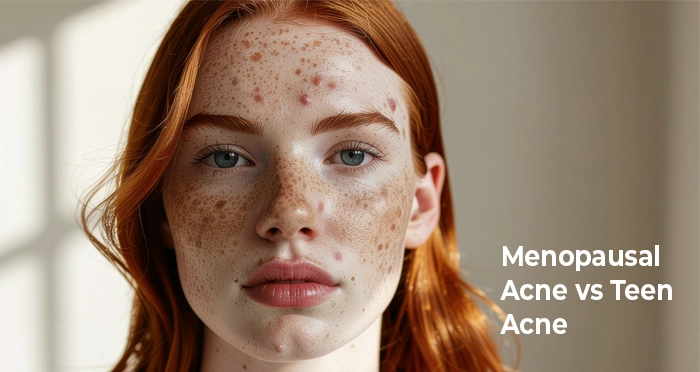
Menopausal acne vs. teen acne differs primarily in root cause and location. Teen acne is driven by oil (sebum) overproduction in the T-zone due to puberty surges. Menopausal acne is caused by hormonal fluctuation—specifically dropping estrogen and relative androgen dominance—resulting in deep, cystic breakouts along the jawline and chin on dry, thinning skin.
Why Does Acne Return During Menopause?
It feels cruel to battle wrinkles and pimples simultaneously, but there is a biological reason for it.
During puberty, your body is flooded with hormones that stimulate oil glands. You likely had oily skin all over. Teen acne thrives in this oil-rich environment.
During menopause, the script flips. Your estrogen levels plummet. Estrogen is responsible for collagen production, skin hydration, and maintaining the skin barrier. When estrogen drops, your testosterone (androgen) levels don’t drop as quickly. This creates a relative androgen dominance.
The result? These androgens stimulate the oil glands deep in the pores, even though the surface of your skin is dry and fragile. This leads to deep, painful cysts rather than surface-level whiteheads.
According to the American Academy of Dermatology, roughly 50% of women experience acne during menopause, proving this is a widespread hormonal event, not a hygiene failure.
How Do Symptoms Differ: Menopausal Acne vs. Teen Acne?
To treat the problem, you must identify the pattern. The presentation of adult hormonal acne is distinct from adolescent breakouts.
The Location Shift
- Teen Acne: Usually appears on the forehead, nose, and chin (the T-Zone). It can also appear on the chest and back.
- Menopausal Acne: Migrates downward. It concentrates on the lower face, specifically the U-Zone (jawline, chin, and neck).
The Lesion Type
- Teen Acne: Often consists of blackheads (open comedones) and whiteheads (closed comedones) mixed with pustules.
- Menopausal Acne: Characterized by deep, tender, cystic bumps under the skin that rarely come to a “head.”
The Skin Environment
- Teen Skin: Resilient, thick, and generally oily. It heals relatively quickly.
- Menopausal Skin: Thinner (due to collagen loss), drier, and more sensitive. It heals slowly and is prone to PIH (Post-Inflammatory Hyperpigmentation).
| Feature | Teen Acne | Menopausal Acne |
| Primary Driver | Puberty & Sebum Overload | Estrogen Drop & Androgens |
| Location | T-Zone (Forehead, Nose) | U-Zone (Chin, Jawline, Neck) |
| Skin Type | Oily / Resilient | Dry / Thin / Sensitive |
| Lesion Type | Blackheads, Whiteheads | Deep Cysts, Tender Nodules |
| Cell Turnover | Fast (Rapid healing) | Slow (Lingering marks) |
| Response to Drying | Tolerates Benzoyl Peroxide | Irritated by harsh drying agents |
Why Do Traditional Teen Treatments Fail Adult Skin?
If you use a “teen” acne wash on menopausal skin, you will likely make the acne worse.
Most teen products contain high concentrations of Benzoyl Peroxide or Salicylic Acid in alcohol-based formulas. Their goal is to dry out excess oil.
Menopausal skin lacks oil. It lacks water and lipids. When you strip the skin barrier of a menopausal woman, the skin panics. It produces more oil to compensate for the dryness, and the inflammation increases.
A compromised barrier lets bacteria in and moisture out. This cycle creates “dry acne,” which is incredibly difficult to treat without the right strategy.
Expert Insight: Dr. Zenovia Gabriel, a dermatologist specializing in hormonal skin, notes that menopausal skin loses 30% of its collagen in the first five years of menopause. Treating it with harsh chemicals accelerates aging while failing to stop the acne.
What Ingredients Actually Work for Menopausal Acne?
To treat menopausal acne vs. teen acne effectively, you must pivot from “drying” to “regulating and repairing.”
1. Retinoids (The Gold Standard)
Retinoids accelerate cell turnover, which slows down with age. They prevent dead skin cells from clogging pores and simultaneously boost collagen production to fight wrinkles.
- Recommendation: Start with a low-strength encapsulated retinol or prescription Tretinoin buffered with moisturizer.
2. Spironolactone (Oral or Topical)
Since this acne is hormonal, topical creams sometimes aren’t enough. Spironolactone is an anti-androgen medication that blocks the hormones causing the cystic breakouts.
- Note: Consult a dermatologist, as this requires a prescription.
3. Azelaic Acid
This is a powerhouse for menopausal skin. It kills bacteria and reduces inflammation, but unlike Benzoyl Peroxide, it is gentle. Crucially, it helps fade the dark spots (pigmentation) that linger after a breakout.
4. Phytoestrogens
Topical skincare containing plant-derived estrogens (like soy or wild yam) can mimic estrogen on the skin’s surface, helping to hydrate and plump the skin without systemic side effects.
What Does an Ideal Menopausal Acne Routine Look Like?
Stop scrubbing. Start nourishing.
Morning Routine:
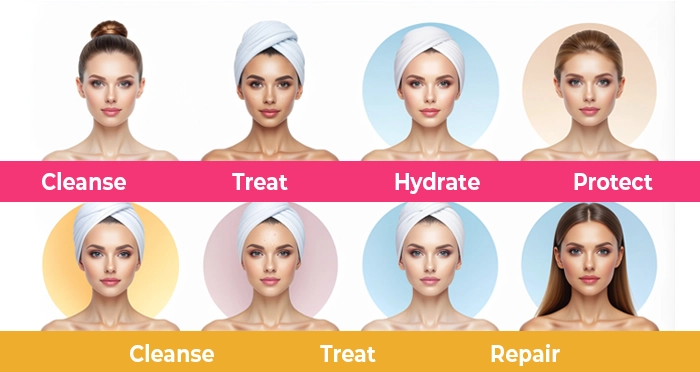
- Cleanse: Use a creamy, non-foaming cleanser (e.g., Ceramide-based).
- Treat: Apply Azelaic Acid or Vitamin C.
- Hydrate: Use a lipid-rich moisturizer.
- Protect: SPF 30+ is non-negotiable (Sun damage worsens acne scars).
Evening Routine:
- Cleanse: Double cleanse if wearing makeup (Oil cleanser followed by gentle wash).
- Treat: Apply Retinol (pea-sized amount).
- Repair: Apply a peptide-heavy night cream.
Looking for solutions for other signs of aging? Read our guide on [Estrogen Deficient Skin Here are 5 Proven Luxury Creams].
How Can Lifestyle Changes Impact Hormonal Breakouts?
Your skin is a reflection of your internal health.
Dietary Triggers
High-glycemic foods (sugar, white bread) spike insulin. Insulin spikes trigger androgen production, which leads to acne. Reducing sugar intake can significantly calm menopausal inflammation.
Stress Management
Cortisol (the stress hormone) is the enemy of menopausal skin. High cortisol mimics testosterone, increasing oil production. Yoga, meditation, or simply better sleep hygiene can act as skincare.
If you are noticing skin laxity alongside breakouts, check out our review on [Turkey Neck Solutions: Testing 3 Medical-Grade Neck Creams Worth the Splurge].
Key Takeaways
- Root Cause: Menopausal acne is caused by hormonal imbalance (low estrogen, relative high androgen), not dirt.
- Location: Expect deep cysts on the chin and jawline, not whiteheads on the nose.
- Avoid: Harsh scrubs and high-percentage Benzoyl Peroxide will damage thinning skin.
- Embrace: Retinoids, Azelaic Acid, and barrier-repairing moisturizers are your best defense.
- Consult: If topicals fail, ask a dermatologist about Spironolactone or HRT options.
Frequently Asked Questions (FAQ)
1. Is menopausal acne permanent?
No, it usually subsides as hormone levels stabilize post-menopause. However, without treatment, it can persist for several years during the transition.
2. Can I use Accutane for menopausal acne?
Yes, low-dose Isotretinoin (Accutane) is sometimes prescribed for resistant adult acne, but it requires careful monitoring due to dryness and lipid profile changes.
3. Why am I getting acne on my neck?
The neck and jawline are the primary target zones for hormonal acne caused by androgen sensitivity.
4. Does HRT (Hormone Replacement Therapy) help acne?
Often, yes. HRT can boost estrogen levels, balancing out the androgens that cause acne. However, some forms of progesterone in HRT can trigger breakouts, so discuss this with your doctor.
5. Is salicylic acid safe for mature skin?
Yes, but in low concentrations (0.5% to 1%) and ideally in a wash-off cleanser rather than a leave-on toner to avoid over-drying.
6. Why does my acne get worse before my period during perimenopause?
Estrogen drops right before menstruation. In perimenopause, this drop is more drastic, leading to severe pre-menstrual cystic flares.
7. What is the best natural supplement for menopausal acne?
Spearmint tea has been shown to have mild anti-androgen properties. Zinc supplements can also help reduce inflammation.
8. Can dairy cause menopausal acne?
Dairy contains hormones that can mimic androgens. Many women find relief by reducing dairy intake, particularly skim milk.
9. How do I treat acne scars on aging skin?
Because collagen is low, scars heal slowly. Retinoids, microneedling, and laser treatments are the most effective ways to smooth texture on mature skin.
10. Is it rosacea or acne?
Menopause can trigger rosacea, which looks like acne (papules) but is accompanied by flushing and redness. A dermatologist can distinguish between the two.
11. Should I pop menopausal pimples?
Never. Menopausal cysts are deep. Squeezing them damages the surrounding tissue, leading to long-lasting dark spots and potential infection.
12. Does collagen powder help acne?
Collagen powder helps general skin hydration and elasticity, which supports healing, but it does not directly prevent the hormonal cause of acne.
13. Why is my skin dry and breaking out at the same time?
This is the hallmark of menopausal acne. Hormones trigger oil deep in the pore, while surface skin loses moisture retention abilities.
14. What makeup is best for menopausal acne?
Look for “non-comedogenic” mineral makeup or foundations with hydrating ingredients like hyaluronic acid. Avoid heavy, matte formulas that settle into lines.
15. How long does it take to see results from a new routine?
Adult skin turns over slower than teen skin. It can take 8 to 12 weeks to see significant improvement from a new skincare regimen.